






Hyundai H1 Fan Clutches
Whether your H1 is an early or late build, we match the fan clutches to your derivative rather than to the badge
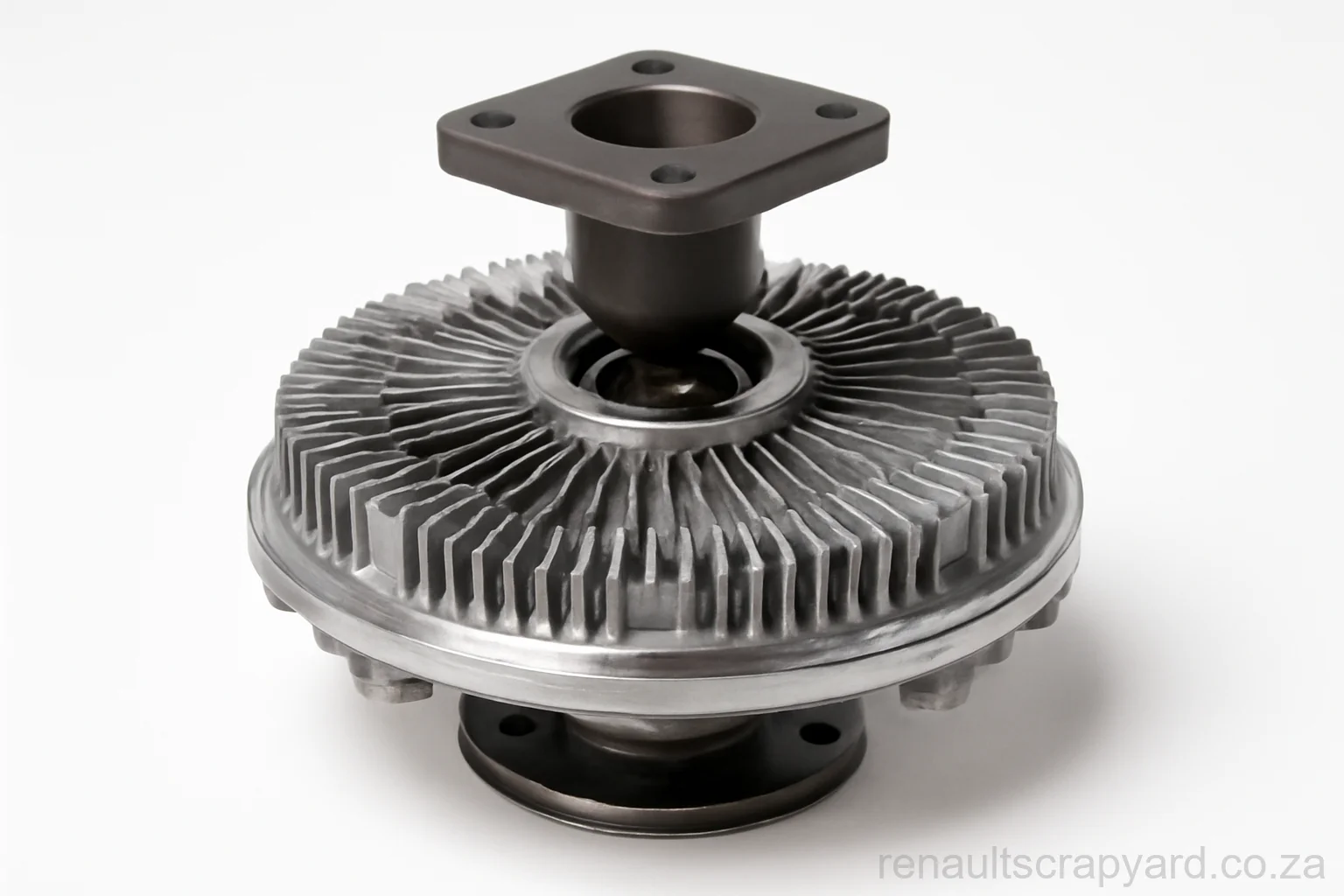
What Are Hyundai H1 Fan Clutches?
A fan clutch is a viscous coupling that engages and disengages the engine-driven cooling fan based on temperature. Mainly relevant to older and commercial Hyundais — H100, H1 and certain 2.0 CRDi H1 variants. Most modern i20s, i30s and Tucsons use electric fans instead, not viscous clutches.
Signs You Need New Fan Clutches
H1 Fan Clutches: what actually decides fitment
Ordering fan clutches for a H1 starts with the generation: the original Starex, then the TQ iLoad, iMax and Grand Starex.Panel van, bus and people-mover bodies on the same TQ base take different rear-end, glass and trim parts, so tell us the body style, not just the model.
- 1
Find the generation code on your H1 — it appears on the VIN plate and on the original registration paperwork.
- 2
Confirm the engine family. The H1 ran 2.4 petrol on selected Grand Starex derivatives, D4CB 2.5 CRDi and 2.5 TD on the earlier Starex in this market.
- 3
Send both to us with the fan clutches you are after , along with petrol or diesel, and whether the car has air conditioning. We match it before we quote, not after.
Sourcing note: the H1no Kia equivalent — the H1 is its own commercial platform — which widens where we can look when local stock is thin.
In South Africa the H1 is mostly shuttle, tour and staff-transport work, which means very high annual mileage and a strong bias towards diesel injection, turbo and clutch components. That is the wear pattern we stock and source against.
Before You Order H1 Fan Clutches
Will fan clutches from another H1 fit mine?
Not automatically. The H1 sold in South Africa as the original Starex, then the TQ iLoad, iMax and Grand Starex, and panel van, bus and people-mover bodies on the same TQ base take different rear-end, glass and trim parts, so tell us the body style, not just the model. Send us the generation code off your VIN plate and we will confirm it either way before anything is dispatched.
How do you check fan clutches actually fits a H1?
We work backwards from the VIN: generation first, then engine family, then whether the car is pre- or post-facelift within that generation. On the H1 specifically, panel van, bus and people-mover bodies on the same TQ base take different rear-end, glass and trim parts, so tell us the body style, not just the model.
What are the symptoms of a bad fan clutch?
Overheating at idle, a constant jet-engine roar even at cruise, a fan that spins too freely when cold and poor aircon performance in traffic. On Hyundai H100 and H1 diesel vans we see this failure around 150,000 km. Easy to diagnose with a cold spin test.
How much does a Hyundai fan clutch cost in South Africa?
SA retail pricing spans roughly R340 to R1,300 depending on model and brand, sourced through our supplier network. Note: most modern Hyundai passenger cars don't use a fan clutch — confirm your engine type first.
Why does my Hyundai overheat at idle?
If your Hyundai uses a viscous fan clutch (older H100, H1, some CRDi H1), a seized-open clutch means the fan barely turns at idle and temperature climbs. On modern electric-fan models overheating points to fan relay, resistor or ECU — different fix entirely.
Why does my Hyundai fan sound like a jet engine?
A seized-closed fan clutch locks the fan permanently engaged — it sounds like a jet because it's spinning at crankshaft speed all the time. Fuel consumption also climbs. Replace the clutch to fix; we carry OEM-spec units suitable for SA diesel Hyundais.
Can you drive a Hyundai with a failing fan clutch?
Yes but carefully. A seized-closed clutch is noisy but safe. A seized-open clutch means no cooling at idle — you'll overheat in Joburg traffic. Drive only at motorway speed where ram-air cools the radiator and head straight to a workshop.
Let us confirm the fan clutches before you buy
Photos of the old part and your VIN are usually all we need. We confirm the fan clutches against your H1 before quoting, not after.