







Hyundai H1 Exhaust Gaskets
Whether your H1 is an early or late build, we match the exhaust gaskets to your derivative rather than to the badge
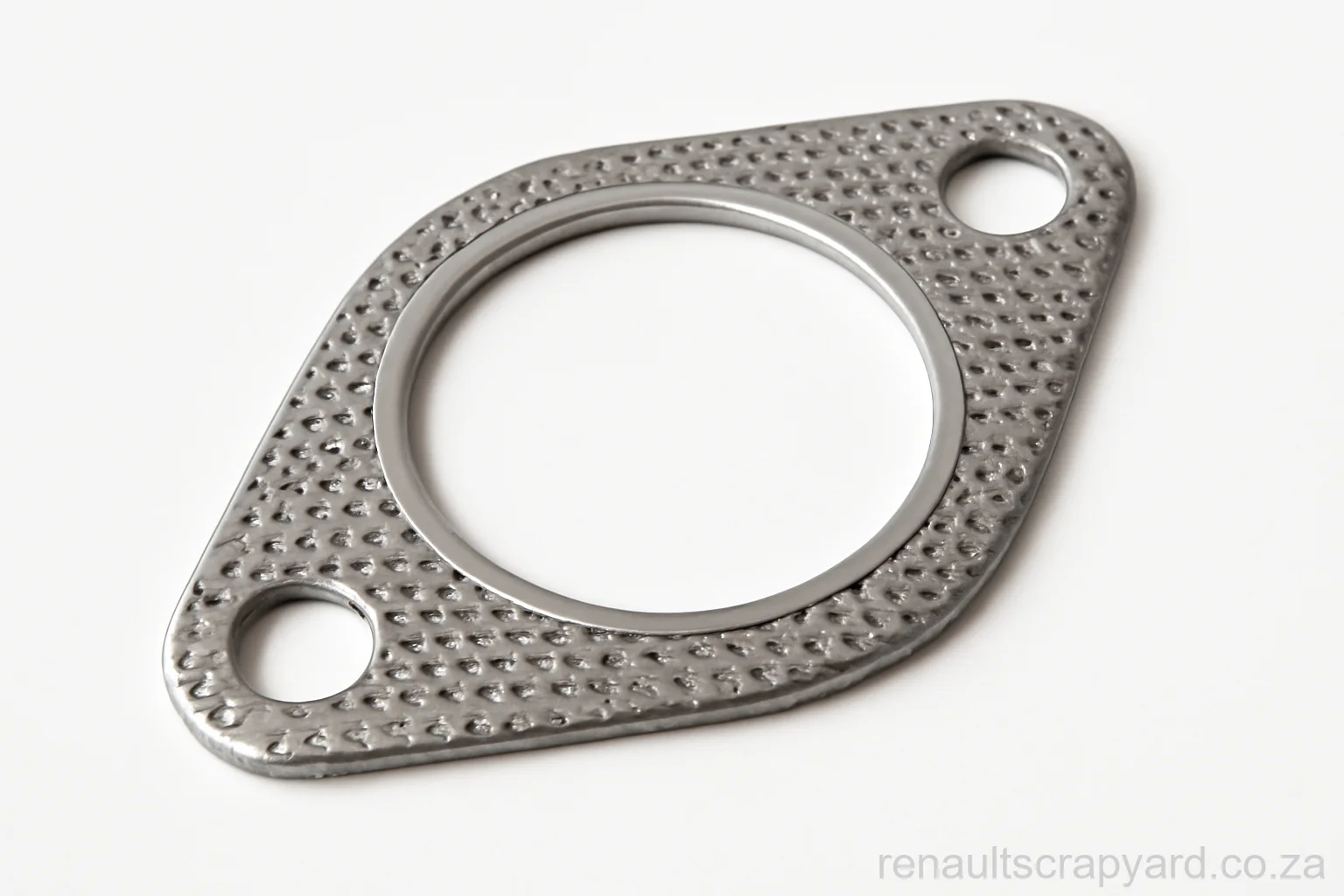
What Are Hyundai H1 Exhaust Gaskets?
Exhaust gaskets seal the joints in your Hyundai's exhaust — head-to-manifold, manifold-to-cat and downpipe-to-cat. On 1.6 CRDi and 1.6 T-GDi engines the manifold gasket gets hammered by thermal cycling; blown gaskets are the reason so many Hyundais develop a cold-start ticking noise.
Signs You Need New Exhaust Gaskets
Before you order exhaust gaskets for a H1
Does one exhaust gaskets listing cover every H1?
No. H1 owners are usually surprised by how much turns on the generation code — the original Starex, then the TQ iLoad, iMax and Grand Starex all sold here.Panel van, bus and people-mover bodies on the same TQ base take different rear-end, glass and trim parts, so tell us the body style, not just the model.
Which engine is in my H1?
SA-market cars were sold with 2.4 petrol on selected Grand Starex derivatives, D4CB 2.5 CRDi and 2.5 TD on the earlier Starex. The code stamped on the block settles it — the badge on the boot does not.
What do you need from me to quote exhaust gaskets?
The model year and engine code, and which section has failed. Catalytic converters and sensors are emissions-standard specific, so a part from a different market or a different production year of the same Hyundai may physically fit and still not satisfy the engine management.
In South Africa the H1 is mostly shuttle, tour and staff-transport work, which means very high annual mileage and a strong bias towards diesel injection, turbo and clutch components. That is the wear pattern we stock and source against.
Before You Order H1 Exhaust Gaskets
Will exhaust gaskets from another H1 fit mine?
Not automatically. The H1 sold in South Africa as the original Starex, then the TQ iLoad, iMax and Grand Starex, and panel van, bus and people-mover bodies on the same TQ base take different rear-end, glass and trim parts, so tell us the body style, not just the model. Send us the generation code off your VIN plate and we will confirm it either way before anything is dispatched.
How do you check exhaust gaskets actually fits a H1?
We work backwards from the VIN: generation first, then engine family, then whether the car is pre- or post-facelift within that generation. On the H1 specifically, panel van, bus and people-mover bodies on the same TQ base take different rear-end, glass and trim parts, so tell us the body style, not just the model.
How much does a Hyundai exhaust gasket cost?
Gaskets are cheap — a manifold gasket typically sits in the budget-aftermarket bracket and SA suppliers carry Hyundai-fit units. Labour varies hugely depending on where the gasket sits. Send your VIN for a quote.
What are the symptoms of a blown exhaust gasket?
Cold-start ticking that fades when warm, exhaust smell near the engine, black soot around the manifold flange and reduced turbo response on CRDi engines. The noise is often mistaken for lifter tick — the gasket test is a cold-start listen at the manifold.
How much does it cost to replace a Hyundai exhaust manifold gasket?
The gasket itself is cheap; labour is where it adds up. Access on 1.6 CRDi and 1.6 T-GDi engines means removing the exhaust manifold — typically three to four hours. Conical mesh gaskets are well-regarded. Send your VIN for a full quote.
Can you drive a Hyundai with a leaking exhaust gasket?
For a short distance, yes — but a leaking manifold gasket lets unmetered air confuse the lambda sensor, damages turbo response and can trigger limp mode. Fumes can also enter the cabin. Fix it at the next service interval, sooner on CRDi diesels.
Where can I buy Hyundai exhaust gaskets in South Africa?
We source manifold, downpipe and catalyst gaskets nationally through our SA supplier network. 1.6 CRDi and 1.6 T-GDi gaskets are common stock. Send your VIN for the exact part-number match.
Let us confirm the exhaust gaskets before you buy
Photos of the old part and your VIN are usually all we need. We confirm the exhaust gaskets against your H1 before quoting, not after.