







Hyundai H1 Resonator
Resonator to suit the Hyundai H1, cross-referenced against OEM specification and dispatched countrywide
What Are Hyundai H1 Resonator?
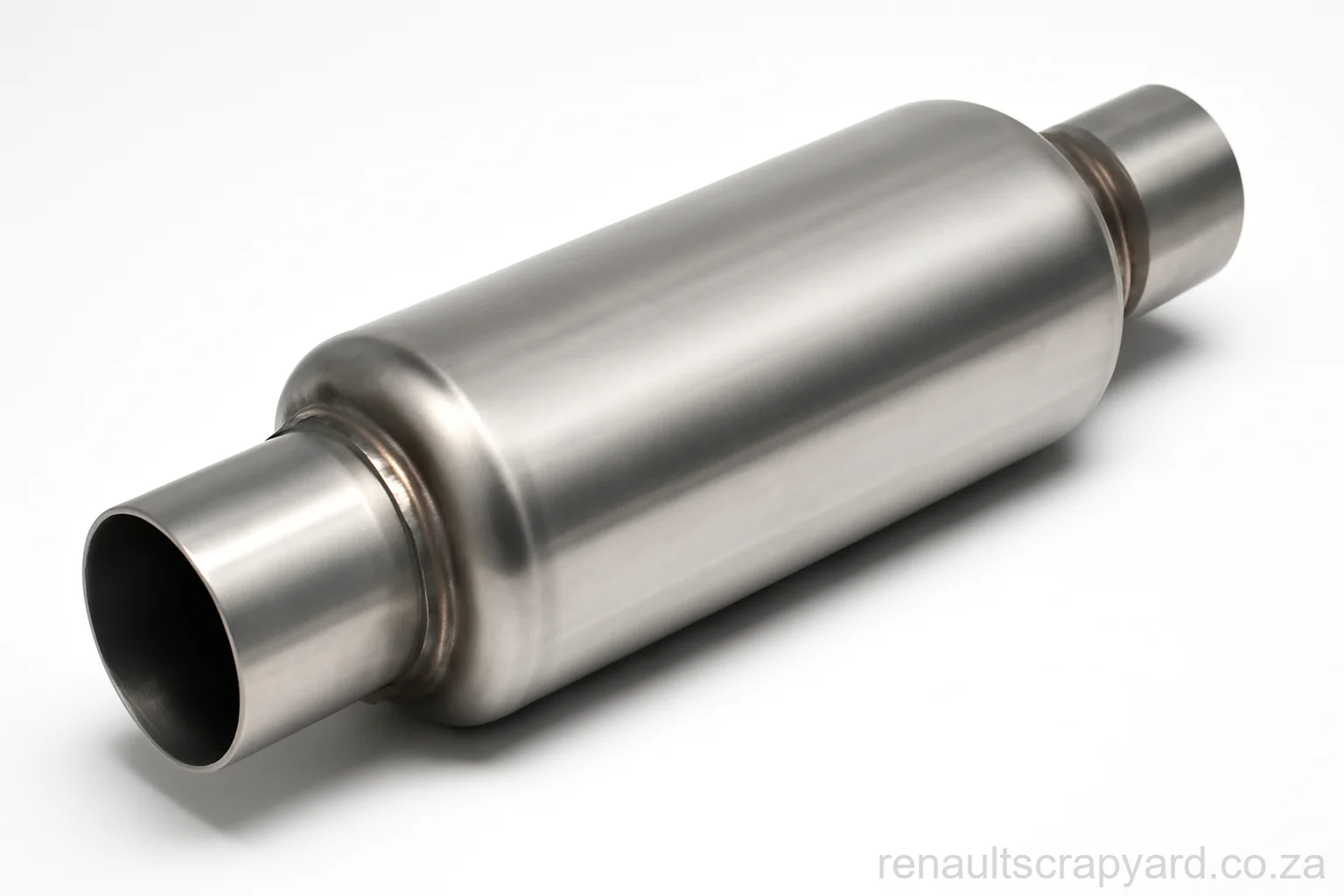
A resonator is a tuned chamber in the exhaust between the catalytic converter and the rear box, there to cancel specific frequencies rather than to reduce volume generally. It is not a universal fitment across the Hyundai range — some derivatives run one, others achieve the same result with a longer centre section, and the two are not interchangeable even on the same model. Corrosion here is worst on the KwaZulu-Natal coast, where salt air and short-trip condensation attack the thin-wall steel from both sides at once. If yours has rotted, tell us whether the section is a single welded run or bolts up at flanges, because that changes what we quote.
Signs You Need New Resonator
H1 generations and resonator — the short version
On the H1, the original Starex, then the TQ iLoad, iMax and Grand Starex are all in circulation locally, and they do not share one parts list.Panel van, bus and people-mover bodies on the same TQ base take different rear-end, glass and trim parts, so tell us the body style, not just the model.
Engine families fitted to the SA-market H1:
Catalytic converters and sensors are emissions-standard specific, so a part from a different market or a different production year of the same Hyundai may physically fit and still not satisfy the engine management.
Send us the model year and engine code, and which section has failed with your enquiry and we will confirm the correct resonator against your car before anything is dispatched.
In South Africa the H1 is mostly shuttle, tour and staff-transport work, which means very high annual mileage and a strong bias towards diesel injection, turbo and clutch components. That is the wear pattern we stock and source against.
Hyundai H1 Resonator — Questions We Get Asked
Will resonator from another H1 fit mine?
Not automatically. The H1 sold in South Africa as the original Starex, then the TQ iLoad, iMax and Grand Starex, and panel van, bus and people-mover bodies on the same TQ base take different rear-end, glass and trim parts, so tell us the body style, not just the model. Send us the generation code off your VIN plate and we will confirm it either way before anything is dispatched.
Which engines did the South African H1 come with?
SA-market cars ran 2.4 petrol on selected Grand Starex derivatives, D4CB 2.5 CRDi, 2.5 TD on the earlier Starex. The code stamped on the block is what we work from — the badge on the boot is not reliable on its own.
Does every Hyundai have a resonator?
No, and that catches people out. Some derivatives run one, others achieve the same result with a longer centre section, and the two are not interchangeable even on the same model. Before ordering, check what is actually under your car rather than what a listing says fits.
What does a failing resonator sound like?
You hear it before you see it: a raspier, louder exhaust, a rattle over bumps and often a drone in the mid range. Underneath, look for rust perforation along the seams and pinholes where condensation and coastal air have worked through from the inside.
Resonator or muffler — what is the difference?
The muffler is the main silencer, a larger box that brings overall volume down. The resonator is a smaller tuned chamber that cancels specific frequencies to kill the drone. Hyundais that have both run them in series, so one does not substitute for the other.
Where does the resonator sit on a Hyundai exhaust?
Midway along the system, between the catalytic converter and the rear muffler, generally under the floor towards the back of the cabin. On the i20, Accent and Creta it is the smaller canister ahead of the larger rear silencer.
Can I keep driving with a blown resonator?
Short-term yes — it mostly affects noise rather than how the car drives. The caveat is that a resonator rusted through is usually telling you about the rest of the system, and a loose section dropping onto the road is a different order of problem. Get it looked at before the whole system goes.
Learn More About Hyundai H1 Resonator
Consumer rights guidance on vehicle repairs and parts purchases in South Africa.
Find an RMI-accredited exhaust specialist for inspection and replacement.
General vehicle maintenance guidance and roadside support for SA motorists.
Not sure which resonator fits your H1?
Send us your VIN or the engine code off the block and our Hyundai desk will cross-check the correct resonator for your exact H1 derivative.