


Hyundai H1 Control Arms
Control Arms to suit the Hyundai H1, cross-referenced against OEM specification and dispatched countrywide
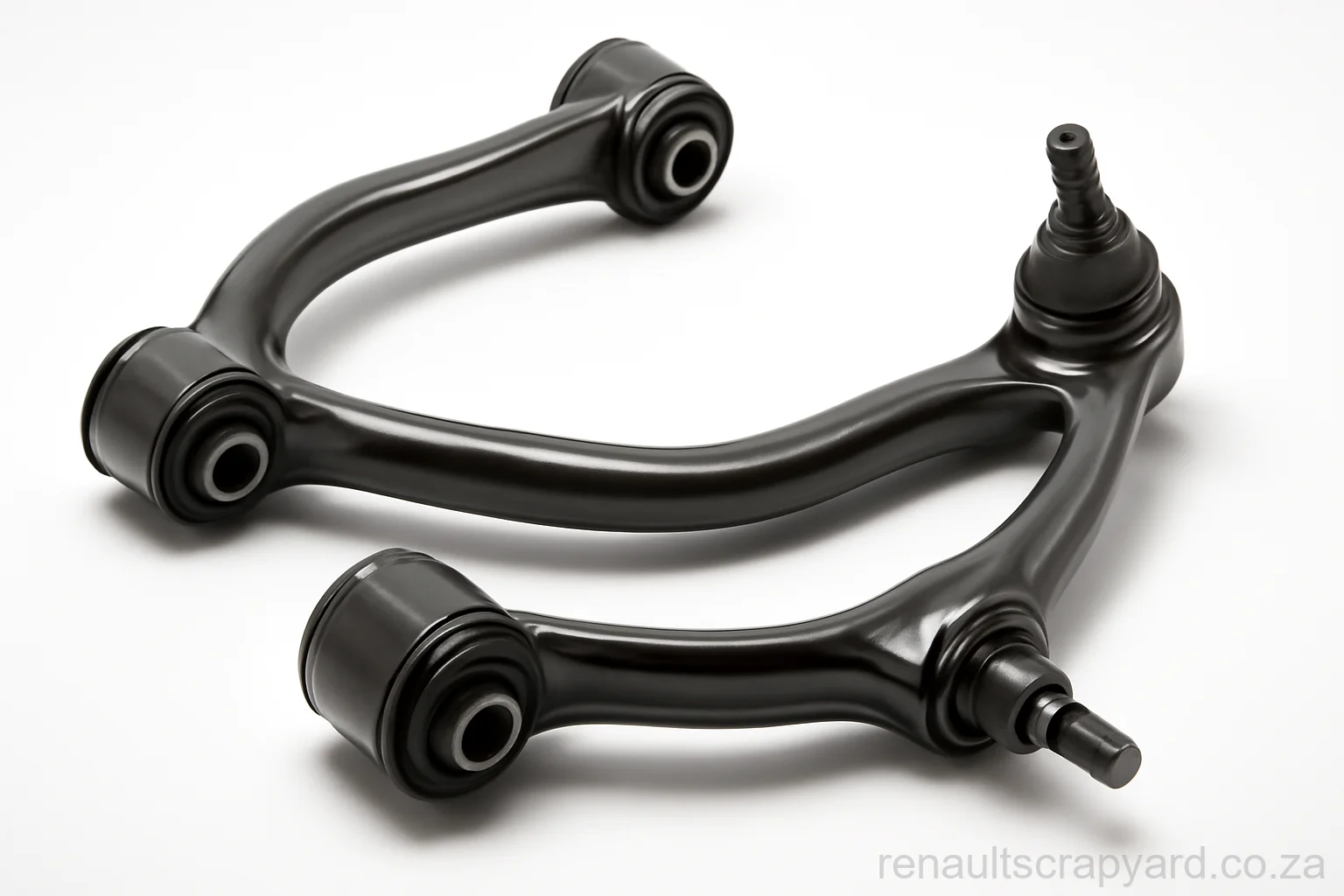
What Are Hyundai H1 Control Arms?
Control arms are critical suspension components in your Hyundai that connect the vehicle's chassis to the wheel hub assembly, allowing controlled vertical movement while maintaining proper wheel alignment. In South African Hyundai models like the i20, Tucson, Creta and Sonata, control arms work constantly to absorb impacts from potholes, speed bumps and uneven road surfaces while ensuring stable handling. Whether your Hyundai is equipped with a Gamma petrol, T-GDi turbocharged, or CRDi/U-line CRDi diesel engine, the control arms bear significant loads during acceleration, braking and cornering.
In South Africa's diverse driving conditions—from Johannesburg's potholed streets to coastal highways and gravel roads—control arms endure considerable stress. Each control arm contains bushings (rubber or polyurethane mounts) and typically connects to a ball joint, both of which wear over time. Failed control arms compromise steering precision, tire wear and overall safety. Regular inspection is crucial, particularly for vehicles frequently driven on rough SA roads or those exceeding 80,000 km.
Signs You Need New Control Arms
How we match control arms to your H1
On the H1, the original Starex, then the TQ iLoad, iMax and Grand Starex are all in circulation locally, and they do not share one parts list.Panel van, bus and people-mover bodies on the same TQ base take different rear-end, glass and trim parts, so tell us the body style, not just the model.
- 1
Find the generation code on your H1 — it appears on the VIN plate and on the original registration paperwork.
- 2
Confirm the engine family. The H1 ran 2.4 petrol on selected Grand Starex derivatives, D4CB 2.5 CRDi and 2.5 TD on the earlier Starex in this market.
- 3
Send both to us with the control arms you are after , along with the generation code and whether the car is front- or all-wheel drive. We match it before we quote, not after.
Sourcing note: the H1no Kia equivalent — the H1 is its own commercial platform — which widens where we can look when local stock is thin.
In South Africa the H1 is mostly shuttle, tour and staff-transport work, which means very high annual mileage and a strong bias towards diesel injection, turbo and clutch components. That is the wear pattern we stock and source against.
Hyundai H1 Control Arms — Questions We Get Asked
Will control arms from another H1 fit mine?
Not automatically. The H1 sold in South Africa as the original Starex, then the TQ iLoad, iMax and Grand Starex, and panel van, bus and people-mover bodies on the same TQ base take different rear-end, glass and trim parts, so tell us the body style, not just the model. Send us the generation code off your VIN plate and we will confirm it either way before anything is dispatched.
Which engines did the South African H1 come with?
SA-market cars ran 2.4 petrol on selected Grand Starex derivatives, D4CB 2.5 CRDi, 2.5 TD on the earlier Starex. The code stamped on the block is what we work from — the badge on the boot is not reliable on its own.
How much does it cost to replace Hyundai control arms in South Africa?
Control arm replacement for Hyundai models typically costs between R1,550-R4,350 per side including parts and labour, depending on your model and whether you choose OEM or aftermarket parts. Front control arms for an i20 or Tucson generally range R850-R1,900 each, while Creta and Sonata models may cost R1,200-R2,600 per arm. Labour adds approximately R850-R1,450 depending on your workshop and location.
How long do Hyundai control arms last in South African conditions?
Under normal SA driving conditions, Hyundai control arms typically last 100,000-150,000 km, though bushings may wear sooner on poorly maintained roads. Vehicles frequently driven on gravel, potholed urban streets, or overloaded may require replacement as early as 60,000-80,000 km. Regular suspension inspections during services help catch wear before safety is compromised.
Can I replace just the control arm bushings instead of the entire arm?
Yes, control arm bushings can often be replaced separately on many Hyundai models, costing R300-R750 per bushing plus labour. However, if the ball joint is integrated or the arm itself is bent or cracked, full replacement is necessary. Many mechanics recommend replacing the complete arm (R850-R2,000) to avoid repeated labour costs, especially on higher-mileage vehicles.
Should I replace both control arms at the same time?
While not always mandatory, replacing both left and right control arms simultaneously is recommended for balanced handling and even wear. If one arm has failed, the opposite side has endured similar stress and mileage. Replacing both ensures symmetrical suspension geometry and avoids a second workshop visit shortly after, saving on labour costs in the long run.
Do Hyundai Tucson and Creta models use the same control arms?
No, the Tucson and Creta use different control arm designs due to their distinct platforms and suspension geometry. The Creta, being larger and heavier, requires more robust arms with different mounting points and dimensions. Always verify parts compatibility using your VIN number or consult your Hyundai dealer to ensure correct fitment for your specific model and year.
Other Suspension for the Hyundai H1
Not sure which control arms fits your H1?
Send us your VIN or the engine code off the block and our Hyundai desk will cross-check the correct control arms for your exact H1 derivative.