




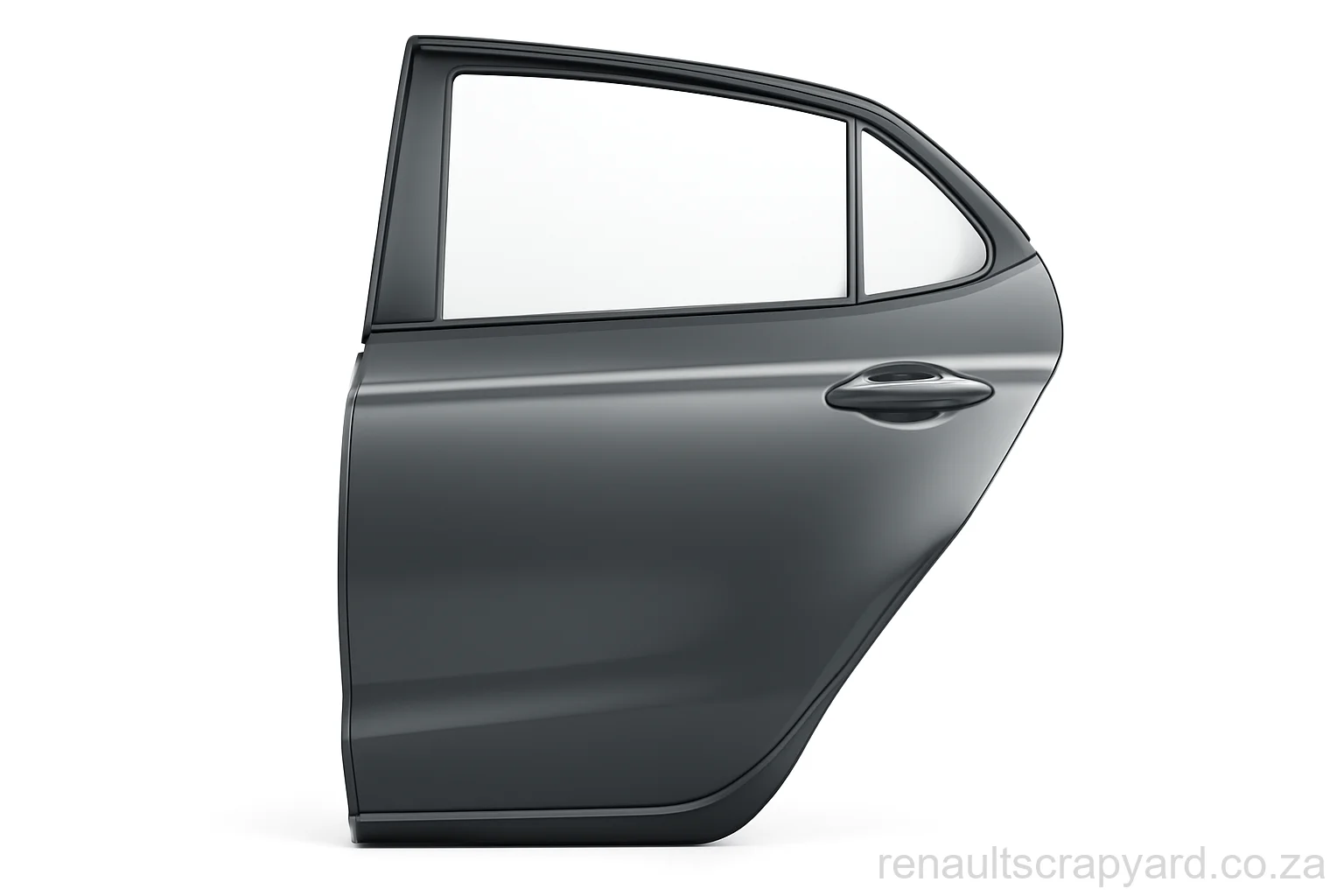
Hyundai H100 Left Rear Door
Whether your H100 is an early or late build, we match the left rear door to your derivative rather than to the badge
What Are Hyundai H100 Left Rear Door?
The left rear door on a Hyundai is the complete shell, hinge set, window mech and trim on the passenger-side rear. We see Tucson, H100 and H1 central locking fail on rear doors and the wiring loom flex between B-pillar and door breaks from constant opening.
Signs You Need New Left Rear Door
H100 Left Rear Door: what actually decides fitment
H100 owners are usually surprised by how much turns on the generation code — Porter, Porter II and the H100 bakkie all sold here.Dropside, tipper and canopy conversions mean the load body is frequently not standard, so load-bed and rear-body parts have to be matched to the conversion rather than to the model.
- 1
Find the generation code on your H100 — it appears on the VIN plate and on the original registration paperwork.
- 2
Confirm the engine family. The H100 ran the 2.5 and 2.6 diesels as badged on the SA derivatives in this market.
- 3
Send both to us with the left rear door you are after , along with the generation code, whether the car is pre- or post-facelift, and the paint code. We match it before we quote, not after.
Sourcing note: the H100no Kia equivalent — a dedicated light-commercial cab-over platform — which widens where we can look when local stock is thin.
In South Africa the H100 is mostly small-business transport that is loaded to its limit daily, which is why clutch, driveline and front-suspension parts dominate demand rather than trim or electronics. That is the wear pattern we stock and source against.
Before You Order H100 Left Rear Door
Will left rear door from another H100 fit mine?
Not automatically. The H100 sold in South Africa as Porter, Porter II and the H100 bakkie, and dropside, tipper and canopy conversions mean the load body is frequently not standard, so load-bed and rear-body parts have to be matched to the conversion rather than to the model. Send us the generation code off your VIN plate and we will confirm it either way before anything is dispatched.
How do you check left rear door actually fits a H100?
We work backwards from the VIN: generation first, then engine family, then whether the car is pre- or post-facelift within that generation. On the H100 specifically, dropside, tipper and canopy conversions mean the load body is frequently not standard, so load-bed and rear-body parts have to be matched to the conversion rather than to the model.
How much does a Hyundai rear door cost to replace?
Used rear doors through SA strippers typically run R1,900-R7,300 depending on model, colour and condition. Pro Hyundai Spares and our supplier network stock used i20, Accent and Creta rear doors.
Why won't my Hyundai rear door open or close?
The most common cause is a seized latch or a broken door-harness wire between the B-pillar and door, which kills central locking and window drop. Stripping the door card usually finds snapped copper inside the rubber boot.
Can I get a used Hyundai rear door in South Africa?
Yes. Pro Hyundai Spares carries used rear doors for i20, Accent, Creta and Santa Fe, colour-matched where possible. Send your VIN, side and colour code and we will quote an exact match.
What causes Hyundai central locking to fail on the rear doors?
On Tucson, H100 and H1, the flexible wire loom between the B-pillar and door fatigues and snaps from thousands of open-close cycles. Rear doors fail before fronts because fewer wires mean less redundancy. A loom repair fixes it permanently.
How do I fix a stuck Hyundai rear door latch?
Remove the door card, unbolt the latch through the outer shell access and unplug its connector. A new latch kit is under R1,000 used. Spraying WD40 into the old one is a short-term fix only, because the internal pawl is usually cracked.
Learn More About Hyundai H100 Left Rear Door
Let us confirm the left rear door before you buy
Photos of the old part and your VIN are usually all we need. We confirm the left rear door against your H100 before quoting, not after.