







Hyundai H100 Radiator Caps
We source radiator caps for every H100 generation sold in South Africa, then check the fit against your VIN before it leaves the warehouse
What Are Hyundai H100 Radiator Caps?
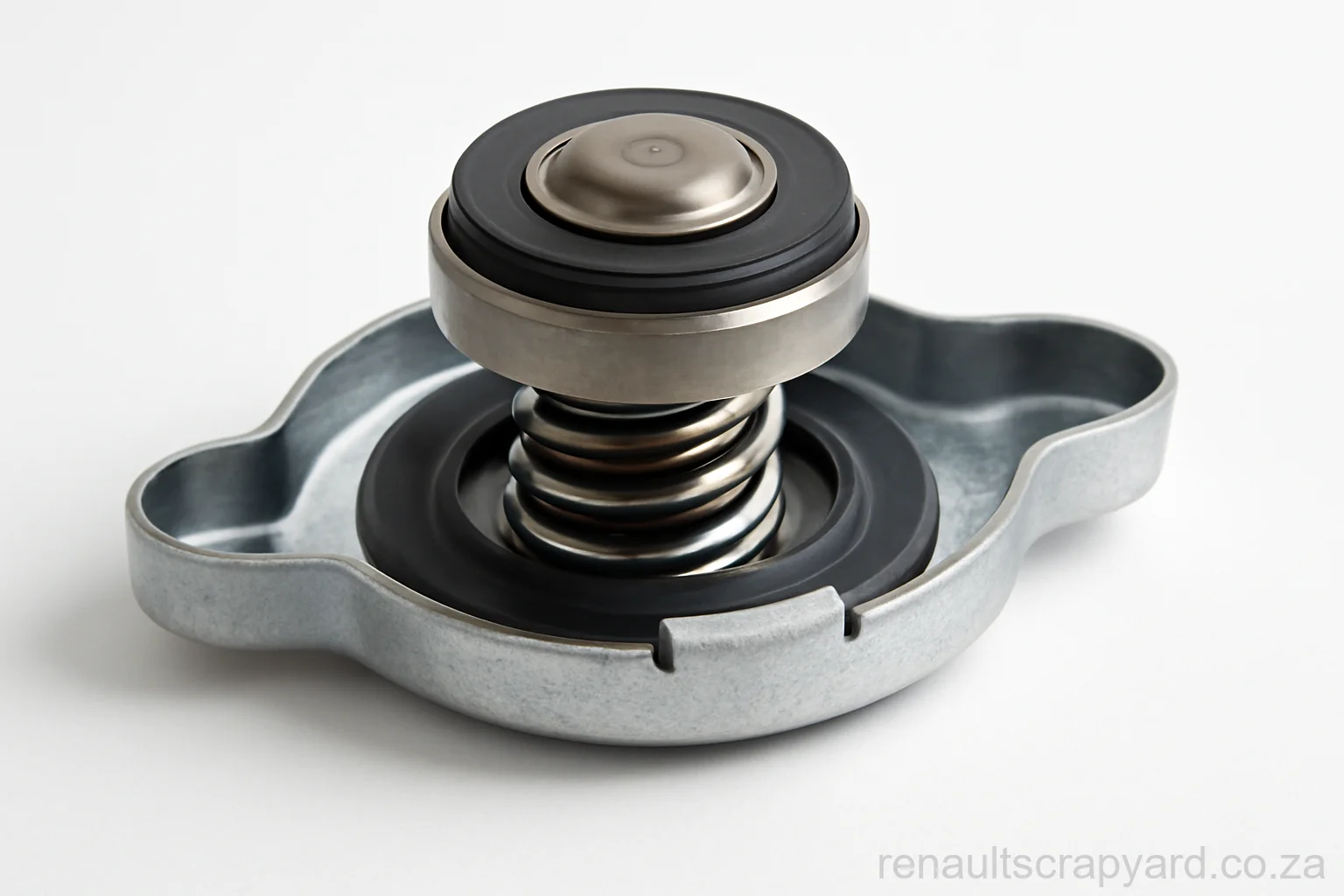
The radiator cap is the pressurised seal on top of the expansion tank that holds coolant in the system and sets the boiling point. Caps are rated to a specific system pressure, and one that physically fits is not automatically the right rating — that is the thing to check when replacing one. We see caps lose their spring tension and cause overheating and weep.
Signs You Need New Radiator Caps
H100 generations and radiator caps — the short version
Does one radiator caps listing cover every H100?
No. H100 owners are usually surprised by how much turns on the generation code — Porter, Porter II and the H100 bakkie all sold here.Dropside, tipper and canopy conversions mean the load body is frequently not standard, so load-bed and rear-body parts have to be matched to the conversion rather than to the model.
Which engine is in my H100?
SA-market cars were sold with the 2.5 and 2.6 diesels as badged on the SA derivatives. The code stamped on the block settles it — the badge on the boot does not.
What do you need from me to quote radiator caps?
Petrol or diesel, and whether the car has air conditioning. Air-conditioned and non-air-conditioned Hyundais take different radiators and fan assemblies, and the CRDi diesels add intercooler plumbing that the petrol cars simply do not have.
In South Africa the H100 is mostly small-business transport that is loaded to its limit daily, which is why clutch, driveline and front-suspension parts dominate demand rather than trim or electronics. That is the wear pattern we stock and source against.
H100 Radiator Caps: Common Questions
Will radiator caps from another H100 fit mine?
Not automatically. The H100 sold in South Africa as Porter, Porter II and the H100 bakkie, and dropside, tipper and canopy conversions mean the load body is frequently not standard, so load-bed and rear-body parts have to be matched to the conversion rather than to the model. Send us the generation code off your VIN plate and we will confirm it either way before anything is dispatched.
Can you source radiator caps for the H100 if local stock is dry?
Usually, yes. The H100 no Kia equivalent — a dedicated light-commercial cab-over platform, which gives us a second catalogue to search when Hyundai-listed stock runs out. We will tell you what we are quoting rather than leaving you to guess.
How much does a Hyundai radiator cap cost in South Africa?
A Hyundai-spec radiator cap runs around R149.99 through our supplier network, which also carries alternatives. Fitted is a two-minute job, so budget well under R250 all in.
What are the symptoms of a bad Hyundai radiator cap?
Rising temperature gauge, hissing from the coolant tank, steam from the bonnet and coolant drops with no visible hose leak are the usual signs. Always replace the cap before stripping hoses or the radiator itself.
Can a faulty radiator cap cause a Hyundai to overheat?
Yes. A cap that cannot hold full system pressure drops the coolant boiling point, so fluid steams away at the expansion tank in traffic. The needle climbs fast and the engine risks head-gasket damage within minutes.
How often should I replace my Hyundai radiator cap?
Fit a new cap with every major coolant change, or every four years. At around R150, it is cheap insurance against an overheating bill that can reach R30,000 on a Hyundai 1.6 CRDi or T-GDi engine with head damage.
Why is coolant leaking from my Hyundai radiator cap?
The rubber seal inside the cap has hardened and lost grip, or the spring has weakened. A cracked expansion tank neck does the same. Always replace the cap first, because it is the cheapest part to rule out.
Learn More About Hyundai H100 Radiator Caps
Tell us which H100 you have
The H100 sold here as Porter, Porter II and the H100 bakkie, and they do not share one parts list. Give us the generation code and we will do the rest.