







Hyundai i20 Water Pumps
Whether your i20 is an early or late build, we match the water pumps to your derivative rather than to the badge
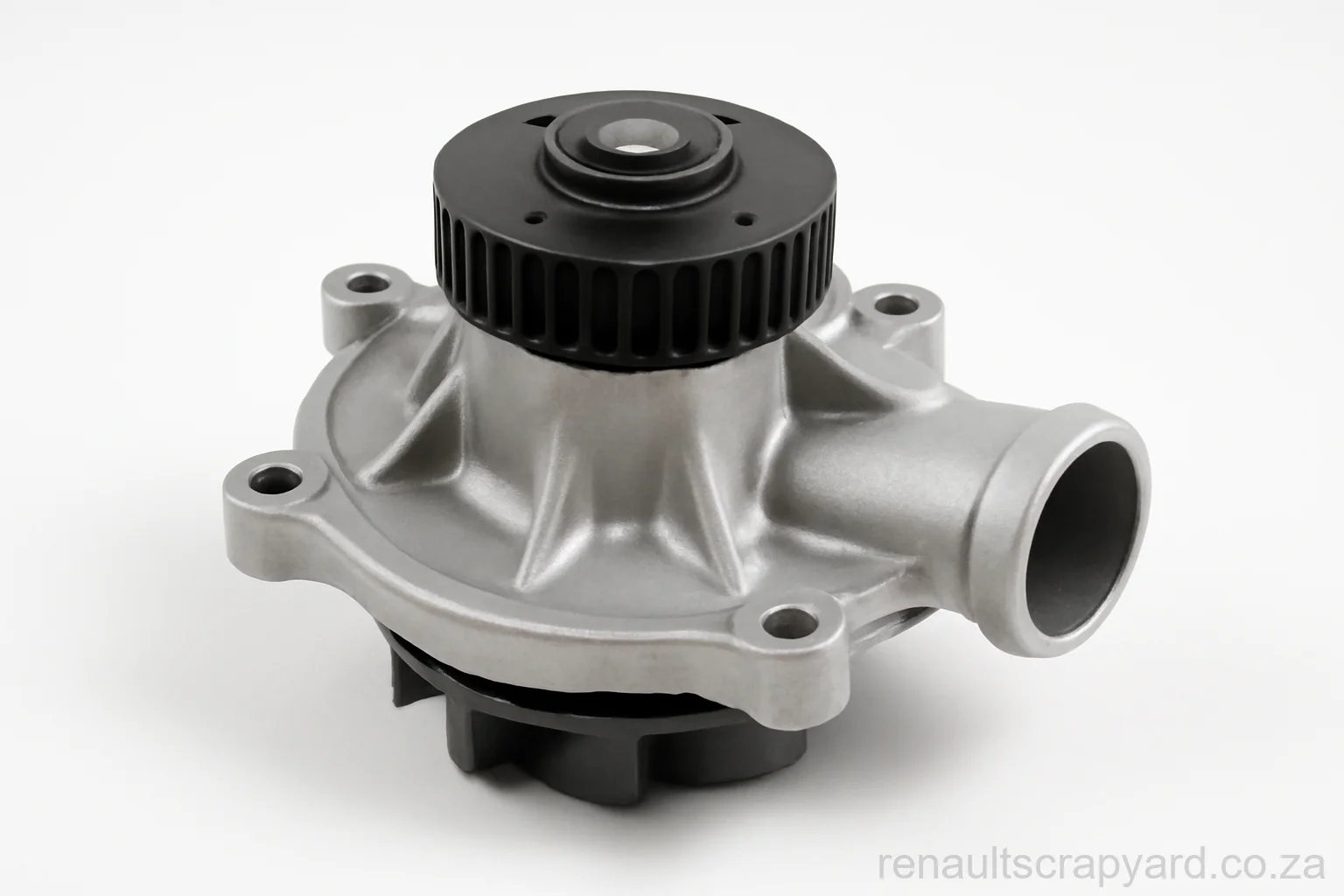
What Are Hyundai i20 Water Pumps?
The water pump is a critical component of your Hyundai's cooling system, responsible for circulating coolant throughout the engine block, cylinder head and radiator. In modern Hyundai engines like the Gamma (1.6 MPi), T-GDi (turbocharged petrol), CRDi diesel range and the older U-line CRDi diesel units, the water pump maintains optimal operating temperatures by ensuring continuous coolant flow. Most Hyundai water pumps are belt-driven, though some newer models feature electric auxiliary pumps for improved efficiency.
In South African conditions where temperatures can soar above 35°C in summer and engines face demanding stop-start traffic in cities like Johannesburg and Cape Town, a functioning water pump is important. Failure of this component can lead to rapid engine overheating, potentially causing head gasket failure or even complete engine seizure. Hyundai water pumps typically last between 80,000 to 120,000 km, though the timing belt-driven pumps on T-GDi and CRDi engines are often replaced during timing belt service intervals to prevent catastrophic failure.
Signs You Need New Water Pumps
How we match water pumps to your i20
i20 owners are usually surprised by how much turns on the generation code — PB, then GB, then the current BC3 all sold here.The PB and GB are different cars underneath despite the shared badge, so a part listed simply as "i20" is not automatically the right one — the generation code decides it.
- 1
Find the generation code on your i20 — it appears on the VIN plate and on the original registration paperwork.
- 2
Confirm the engine family. The i20 ran Kappa 1.2, Gamma 1.4 and Kappa 1.0 T-GDi (N Line) in this market.
- 3
Send both to us with the water pumps you are after , along with petrol or diesel, and whether the car has air conditioning. We match it before we quote, not after.
Sourcing note: the i20shares its Kappa and Gamma engine families with the Kia Rio — which widens where we can look when local stock is thin.
In South Africa the i20 is mostly a high-mileage commuter hatch that spends its life in stop-start city traffic, which is why wear items move faster on an i20 than on almost anything else Hyundai sells here. That is the wear pattern we stock and source against.
Before You Order i20 Water Pumps
Will water pumps from another i20 fit mine?
Not automatically. The i20 sold in South Africa as PB, then GB, then the current BC3, and the PB and GB are different cars underneath despite the shared badge, so a part listed simply as "i20" is not automatically the right one — the generation code decides it. Send us the generation code off your VIN plate and we will confirm it either way before anything is dispatched.
How do you check water pumps actually fits a i20?
We work backwards from the VIN: generation first, then engine family, then whether the car is pre- or post-facelift within that generation. On the i20 specifically, the PB and GB are different cars underneath despite the shared badge, so a part listed simply as "i20" is not automatically the right one — the generation code decides it.
What does a water pump replacement cost on a Hyundai in South Africa?
Water pump replacement for most Hyundai models costs between R2,500 and R6,500 including parts and labour. The pump itself ranges from R800 to R2,200 depending on your model, while labour adds R1,500 to R4,000. Where the pump sits behind the timing drive the figure goes up, because getting to it is most of the job.
Should the water pump be done with the timing belt?
Where the pump is driven by the timing belt, yes — and that is engine-dependent on Hyundai rather than universal, so confirm which arrangement yours uses before booking. When it does apply, doing both together saves around R3,000 in labour, because the belt has to come off to reach the pump either way. A pump that fails a month after a belt job means paying for the whole job twice.
OEM or aftermarket water pump?
OEM Hyundai water pumps cost R1,800 to R2,200 and give you guaranteed fitment. Quality aftermarket brands such as Saleri, Hepu or SKF range from R800 to R1,400 and are generally reliable. What we would avoid is the very cheap end, under R600 — those fail early, and on a part that lives behind the timing drive the labour to redo it dwarfs whatever you saved.
How long does a water pump last in South African conditions?
Typically 80,000 to 120,000 km or 5 to 7 years under normal use. Sustained highway running in Limpopo heat, a diet of short trips in coastal humidity, or neglected coolant all pull that down. Coolant changes every 60,000 km are the cheapest thing you can do to reach the top of that range rather than the bottom.
Can I drive a Hyundai with a failing water pump?
No — and this is one of the few places we would say that flatly. Overheating does its damage in minutes, not kilometres, and the bill at the end is warped heads, a blown head gasket or a seized engine at R40,000+ to repair. If it is overheating or leaking, stop, let it cool and arrange a tow. Driving it to the workshop is how a pump becomes an engine.
Let us confirm the water pumps before you buy
Photos of the old part and your VIN are usually all we need. We confirm the water pumps against your i20 before quoting, not after.