



Hyundai i30 Struts
Struts for the Hyundai i30 — new, used and aftermarket stock, quoted once we know which i30 you are running
What Are Hyundai i30 Struts?
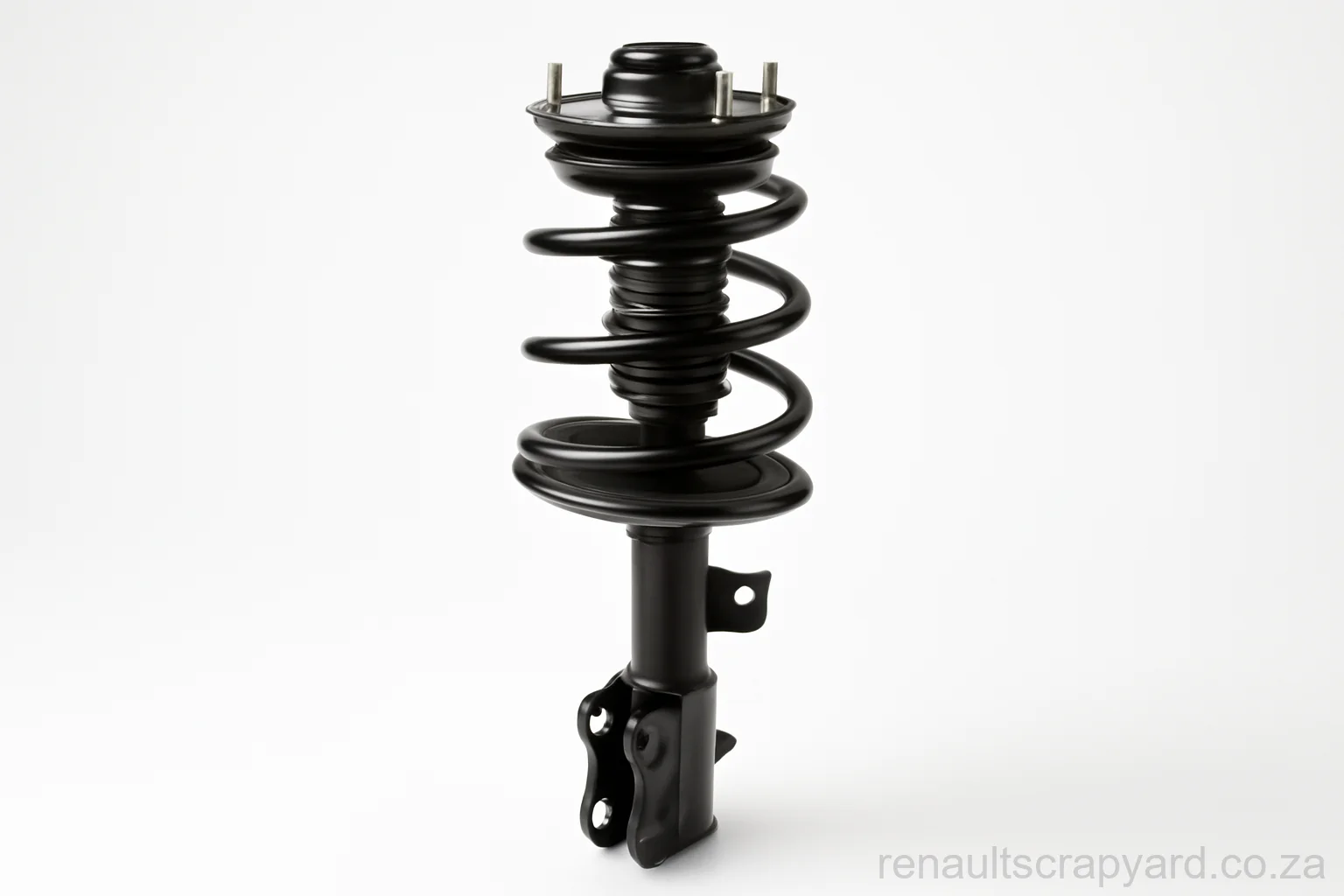
Struts are the complete suspension units combining the damper, coil spring and top mount, usually on the front of your Hyundai and increasingly on the rear too. On SA roads we see struts leak, bounce and clunk by 80,000 to 120,000km on i20, Accent and Tucson models — pothole damage accelerates it.
Signs You Need New Struts
i30 generations and struts — the short version
i30 owners are usually surprised by how much turns on the generation code — FD, GD and PD all sold here.N Line and standard derivatives differ in brakes, suspension and bumper mouldings — the badge on the boot changes the parts list, not just the trim.
Engine families fitted to the SA-market i30:
South African road surfaces punish suspension harder than the markets these cars were tuned for, and the SUVs in the range carry noticeably different rear geometry between two-wheel- and all-wheel-drive derivatives.
Send us the generation code and whether the car is front- or all-wheel drive with your enquiry and we will confirm the correct struts against your car before anything is dispatched.
In South Africa the i30 is mostly bought by drivers who wanted a more solid-feeling hatch, and now aging into the independent aftermarket where the Kia cross-reference becomes genuinely useful. That is the wear pattern we stock and source against.
Hyundai i30 Struts FAQs
Will struts from another i30 fit mine?
Not automatically. The i30 sold in South Africa as FD, GD and PD, and N Line and standard derivatives differ in brakes, suspension and bumper mouldings — the badge on the boot changes the parts list, not just the trim. Send us the generation code off your VIN plate and we will confirm it either way before anything is dispatched.
What should I send you when asking about i30 struts?
The VIN is the single most useful thing — a photo of the plate is fine. Failing that, the generation code and the engine code off the block. The i30 ran as FD, GD and PD, so the generation is what narrows the search.
How do I test whether my Hyundai needs struts?
Push down sharply on each corner and let go. A healthy strut settles in one rebound; a worn one carries on bouncing two or three times. Back that up with the visual — oil weeping down the strut body is the end of the argument. Nose-dive under braking and clunking on rough roads point the same way.
What do struts cost for a Hyundai in South Africa?
Hyundai struts run from around R315, ranging R149 to R4,500 depending on model and specification through our supplier network. Labour is the bigger variable — a front pair takes around two hours. Note that front geometry changed within model names on Hyundai, so send the generation code with your enquiry.
Do struts need doing in pairs on a Hyundai?
Yes — both front or both rear together. A fresh strut alongside a worn one unbalances the axle and makes the car pull under braking, which is a worse outcome than the wear you started with. Budget for pairs from the outset.
Is a wheel alignment necessary after fitting struts?
Yes, and it is not an upsell. Unbolting the strut-to-knuckle joint disturbs camber, and a fresh spring changes ride height, which shifts toe. Have a four-wheel alignment done straight after fitting — skipping it wears a new set of tyres out within 10,000km.
How long do struts last on South African roads?
Expect 80,000 to 120,000km before wear is noticeable, and less than that if the car lives on the coast, on gravel, or with a loaded boot. We inspect for weeping, play and the bounce test rather than replacing purely on the odometer, because the mileage figure is the least reliable part of the picture.
Get your i30 struts matched properly
A part number from the old unit, or simply your VIN, is enough for us to identify the right struts for your i30.