

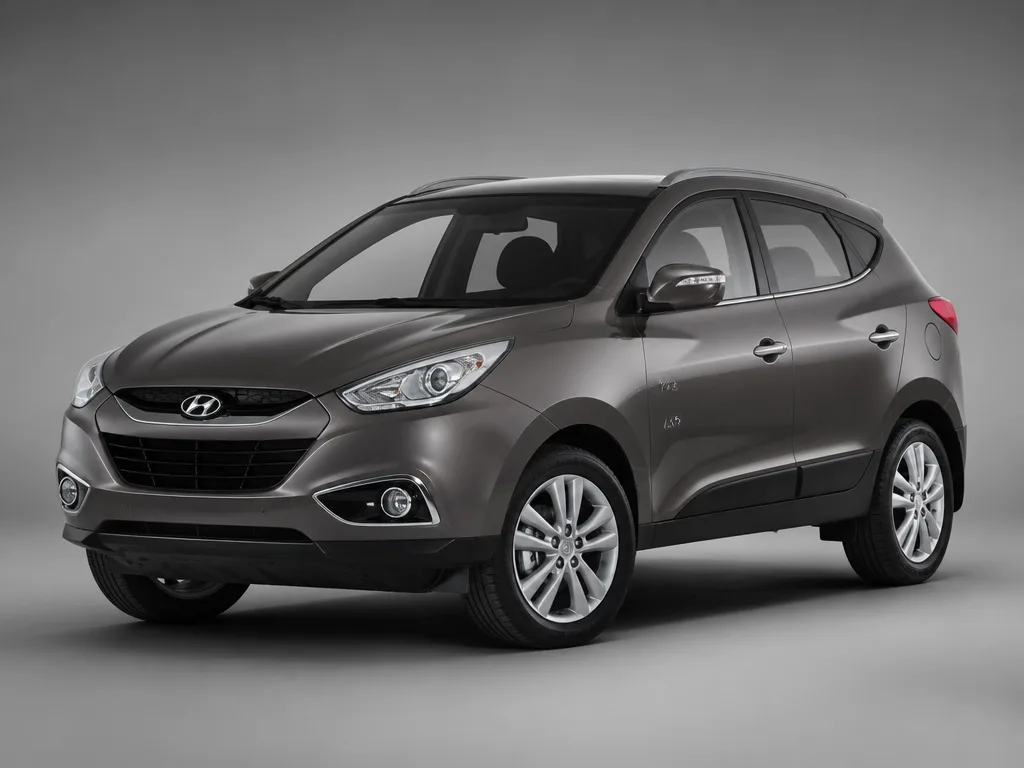

Hyundai Santa Fe Brake Booster
We source brake booster for every Santa Fe generation sold in South Africa, then check the fit against your VIN before it leaves the warehouse. Find quality Hyundai Santa Fe salvage yard at our facility.
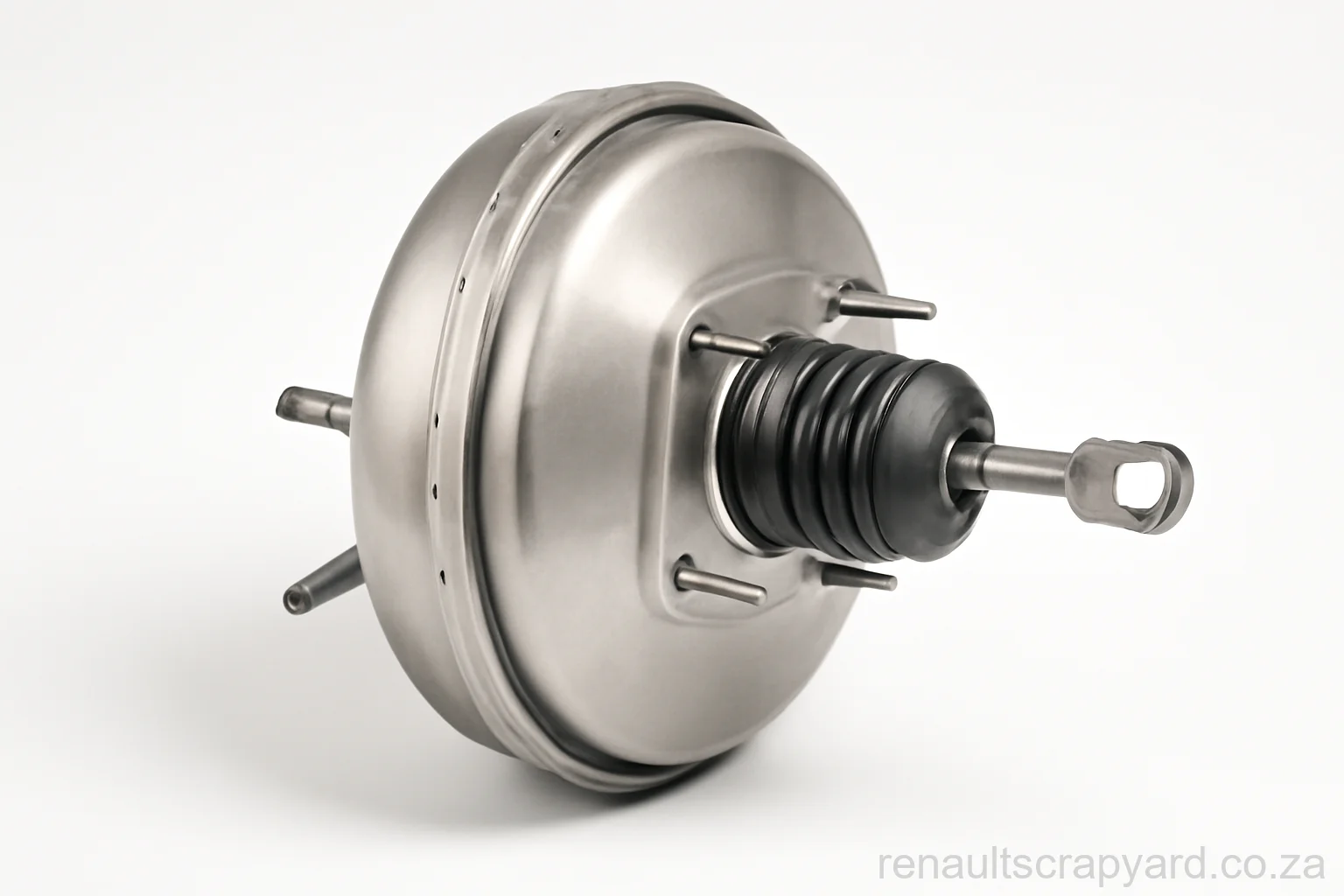
What Are Hyundai Santa Fe Brake Booster?
The brake booster uses engine vacuum to multiply the force of your foot on the pedal — without it, braking a 1,400 kg Accent or Creta takes serious leg strength. Most Hyundais run a vacuum booster off the inlet manifold; diesel CRDis add a dedicated vacuum pump.
Signs You Need New Brake Booster
What a parts desk needs to know about your Santa Fe
What changes across the range
Ordering brake booster for a Santa Fe starts with the generation: SM, CM, DM and TM.
Five- and seven-seat derivatives differ well beyond the third-row seat itself — floor pan, trim, glass and rear HVAC parts all follow the seating configuration.
Worth knowing: the Santa Fea platform relative of the Kia Sorento across several generations.
What we check on brake booster
- •The generation code, because Santa Fe parts lists split on it
- •The engine family — this Santa Fe was sold with Delta 2.7 V6 (SM), 2.2 CRDi (CM) and R-line 2.2 CRDi (DM, TM)
- •The derivative and whether the car has been fitted with non-standard wheels, which can rule out some caliper and disc combinations
- •Whether the car is pre- or post-facelift within its generation
In South Africa the Santa Fe is mostly the tow car of the range, so cooling, driveline and rear-suspension components carry loads the same parts never see on a lighter Hyundai. That is the wear pattern we stock and source against.
Santa Fe Brake Booster: Common Questions
Will brake booster from another Santa Fe fit mine?
Not automatically. The Santa Fe sold in South Africa as SM, CM, DM and TM, and five- and seven-seat derivatives differ well beyond the third-row seat itself — floor pan, trim, glass and rear HVAC parts all follow the seating configuration. Send us the generation code off your VIN plate and we will confirm it either way before anything is dispatched.
Can you source brake booster for the Santa Fe if local stock is dry?
Usually, yes. The Santa Fe a platform relative of the Kia Sorento across several generations, which gives us a second catalogue to search when Hyundai-listed stock runs out. We will tell you what we are quoting rather than leaving you to guess.
What are the symptoms of a bad brake booster on a Hyundai?
A rock-hard pedal is the headline symptom — you're pushing against the master cylinder alone. Expect hissing under the dash, a rough idle when braking and stopping distances that spike. On CRDi diesels a failed vacuum pump will mimic these symptoms exactly.
How much does it cost to replace a Hyundai brake booster?
Costs vary by model and engine — a petrol i20 uses a simpler vacuum booster, while CRDi diesels often need the vacuum pump replaced alongside. Labour runs three to four hours because the master cylinder has to come off. Send us your VIN for a free quote.
Can I drive my Hyundai with a faulty brake booster?
We don't recommend it. The brakes still work mechanically, but stopping distance can double — dangerous in SA traffic. If you must move the car, do it at low speed, short distance, with extra following room. Rather get it towed or fixed first.
Why is my Hyundai brake pedal hard to press?
Usually a loss of vacuum — either a split booster diaphragm, a perished vacuum hose, a faulty one-way valve, or (on CRDi diesels) a failed vacuum pump. Start by checking the hose from the booster to the manifold — it's cheap and often the culprit.
Where can I buy a Hyundai brake booster in South Africa?
We source new and used boosters nationally through our supplier network, matched to your exact VIN. I20, Tucson, Accent and Creta units are the common-stock items — older Getz/Accent boosters are strip-yard only. Send your chassis number and we'll quote same-day.
Tell us which Santa Fe you have
The Santa Fe sold here as SM, CM, DM and TM, and they do not share one parts list. Give us the generation code and we will do the rest.